I've deployed WordPress Multisite networks for universities with 500+ subsites, agencies managing 100+ client sites, and SaaS platforms serving thousands of users. In this guide, I'll share everything you need to know to set up, configure, and manage production-ready WordPress Multisite networks.
What is WordPress Multisite?
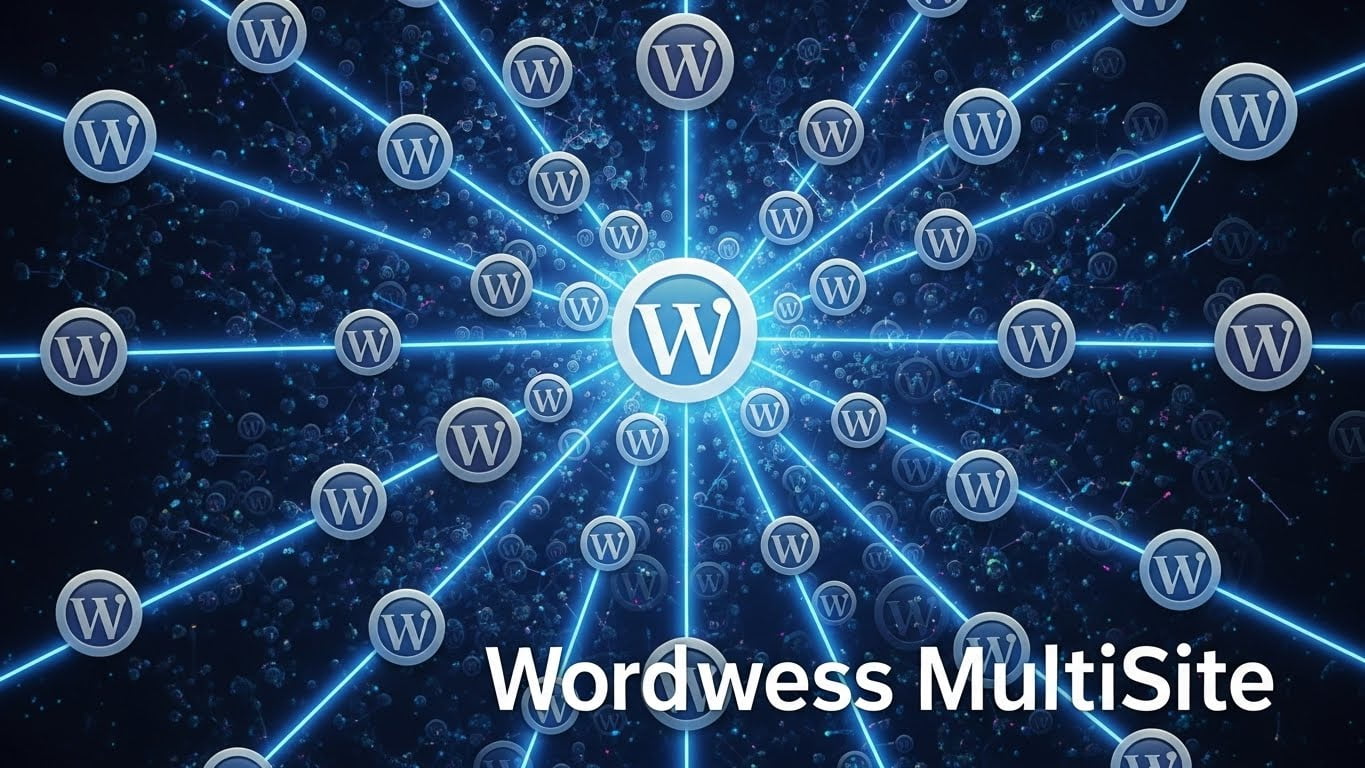
WordPress Multisite turns a single WordPress installation into a network of sites sharing:
- Single WordPress codebase (core, themes, plugins)
- Single database (with separate tables for each site)
- Centralized administration (network admin dashboard)
- Shared resources (media, users, configurations)
Think of it like Gmail: one platform, millions of individual accounts.
When to Use WordPress Multisite
Good Use Cases
✅ Agency managing client sites: 50+ client sites, shared themes/plugins, central billing ✅ University network: Department sites, course sites, faculty blogs ✅ SaaS platforms: User-generated sites (like WordPress.com) ✅ Corporate intranet: Department sites, regional offices ✅ Franchise websites: Shared branding, location-specific content ✅ Multi-language sites: Separate site per language
When NOT to Use Multisite
❌ Single site with multiple authors: Just use WordPress roles ❌ Completely different sites: No shared themes/plugins/branding ❌ Client sites requiring isolation: Separate installs for security ❌ Small networks (< 5 sites): Overhead not worth it
I worked with an agency that prematurely adopted Multisite for 5 client sites. The complexity outweighed benefits. Once they hit 25+ sites, Multisite became valuable.
Multisite Architecture Overview
Subdomain vs Subdirectory
Subdomain setup:
main-site.com (network home)
site1.main-site.com
site2.main-site.com
site3.main-site.com
Subdirectory setup:
main-site.com (network home)
main-site.com/site1
main-site.com/site2
main-site.com/site3
Domain mapping (advanced):
main-site.com (network home)
client1.com → site1.main-site.com
client2.com → site2.main-site.com
Database Structure
Single database with prefixed tables per site:
wp_posts                (site 1 - main site)
wp_postmeta
wp_users                (shared across network)
wp_usermeta
wp_blogs                (list of all sites)
wp_sitemeta             (network-wide settings)

wp_2_posts              (site 2)
wp_2_postmeta
wp_2_options

wp_3_posts              (site 3)
wp_3_postmeta
wp_3_options
Setting Up WordPress Multisite
Prerequisites
- Fresh WordPress installation (or backup existing site)
- Apache or Nginx with mod_rewrite
- PHP 7.4+ recommended
- MySQL 5.7+ or MariaDB 10.3+
- SSL certificate (recommended)
- Access to
wp-config.phpand.htaccess
Step 1: Backup Everything
CRITICAL: Backup before enabling Multisite (it modifies core files and database).
# Backup files
tar -czf wordpress-backup-$(date +%Y%m%d).tar.gz /path/to/wordpress

# Backup database
mysqldump -u username -p database_name > db-backup-$(date +%Y%m%d).sql
Step 2: Deactivate All Plugins
Plugins can interfere with Multisite activation.
# Via WP-CLI (fastest)
wp plugin deactivate --all

# Or manually in WordPress dashboard:
# Plugins → Installed Plugins → Deactivate All
Step 3: Enable Multisite in wp-config.php
Add above /* That's all, stop editing! */ line:
/* Multisite */
define('WP_ALLOW_MULTISITE', true);
Save and refresh WordPress dashboard. You'll see:
Tools → Network Setup
Step 4: Configure Network
Visit Tools → Network Setup and choose:
- Subdomain or Subdirectory structure
- Network Title (e.g., "My Network")
- Network Admin Email
Click Install.
Step 5: Update wp-config.php
WordPress will provide code to add to wp-config.php. Example:
define('MULTISITE', true);
define('SUBDOMAIN_INSTALL', true); // false for subdirectory
define('DOMAIN_CURRENT_SITE', 'your-domain.com');
define('PATH_CURRENT_SITE', '/');
define('SITE_ID_CURRENT_SITE', 1);
define('BLOG_ID_CURRENT_SITE', 1);
Add above /* That's all, stop editing! */ line.
Step 6: Update .htaccess (Apache)
Replace existing WordPress rules with:
RewriteEngine On
RewriteRule .* - [E=HTTP_AUTHORIZATION:%{HTTP:Authorization}]
RewriteBase /
RewriteRule ^index\.php$ - [L]

# add a trailing slash to /wp-admin
RewriteRule ^([_0-9a-zA-Z-]+/)?wp-admin$ $1wp-admin/ [R=301,L]

RewriteCond %{REQUEST_FILENAME} -f [OR]
RewriteCond %{REQUEST_FILENAME} -d
RewriteRule ^ - [L]
RewriteRule ^([_0-9a-zA-Z-]+/)?(wp-(content|admin|includes).*) $2 [L]
RewriteRule ^([_0-9a-zA-Z-]+/)?(.*\.php)$ $2 [L]
RewriteRule . index.php [L]
Step 7: Configure DNS (for Subdomains)
If using subdomain structure:
Add wildcard DNS record in your domain registrar:
Type: A
Name: *
Value: Your server IP address
TTL: 3600
This allows any subdomain (site1.yourdomain.com, site2.yourdomain.com) to work.
Step 8: Test Network
- Log out and back in
- You'll see My Sites in admin bar (top left)
- Visit My Sites → Network Admin → Dashboard
Success! Your Multisite network is active.
Creating New Sites
Via Network Admin Dashboard
- My Sites → Network Admin → Sites → Add New
- Fill in:
- Site Address: subdomain or subdirectory name
- Site Title: Display name
- Admin Email: Site administrator email
- Click Add Site
WordPress automatically:
- Creates database tables
- Sends email to site admin
- Configures default theme/settings
Via WP-CLI (Faster)
# Create new site
wp site create --slug=newsite --title="New Site" --email="admin@example.com"

# Create with custom URL (domain mapping)
wp site create --slug=client1 --title="Client Site" --email="client@example.com"

# Create and assign user as admin
wp site create --slug=blog1 --title="Blog 1" --email="user@example.com" --private
Programmatically (for SaaS platforms)
function create_new_site($domain, $title, $user_id) {
    $site_id = wpmu_create_blog(
        $domain,                // e.g., 'newsite' for subdomain
        '/',                    // path (always / for subdomains)
        $title,                 // site title
        $user_id,               // admin user ID
        array('public' => 1),   // options
        1                       // network ID
    );

    if (is_wp_error($site_id)) {
        return false;
    }

    return $site_id;
}

// Usage
$new_site_id = create_new_site('johndoe', 'John Doe Blog', 5);
Network Administration
Network Admin Dashboard
Access: My Sites → Network Admin
Key sections:
- Sites: Manage all sites (activate/deactivate, delete, visit)
- Users: Manage network users, assign to sites
- Themes: Enable themes for entire network
- Plugins: Network-activate plugins
- Settings: Network-wide configurations
Network-Wide vs Site-Specific
Network Admin controls:
- Which themes are available
- Which plugins can be activated
- Default settings for new sites
- User permissions
Site Admins control:
- Their site content
- Activating allowed themes/plugins
- Site-specific settings
User Roles in Multisite
Network roles:
- Super Admin: Full network control (can manage all sites)
- Administrator: Full control over assigned sites
Site roles (standard WordPress):
- Administrator, Editor, Author, Contributor, Subscriber
Assign user to multiple sites:
# Via WP-CLI
wp user set-role user@example.com administrator --url=site1.example.com
wp user set-role user@example.com editor --url=site2.example.com
Theme Management
Enable Themes Network-Wide
- Network Admin → Themes
- Hover over theme → Network Enable
- Site admins can now activate it on their sites
Network-activate (all sites use theme):
- Rare use case
- Enforces consistent branding
Allow Site Admins to Choose Themes
Default behavior: Site admins see enabled themes and can activate/switch freely.
Restrict Theme Access
// Only allow specific themes for non-super admins
function restrict_themes_for_sites($themes) {
    if (is_super_admin()) {
        return $themes;
    }

    $allowed = array('twentytwentyfour', 'my-custom-theme');

    foreach ($themes as $theme_key => $theme) {
        if (!in_array($theme_key, $allowed)) {
            unset($themes[$theme_key]);
        }
    }

    return $themes;
}
add_filter('wp_prepare_themes_for_js', 'restrict_themes_for_sites');
Plugin Management
Network Activation
Network Admin → Plugins → Network Activate
Plugin runs on all sites. Site admins cannot deactivate.
Use for:
- Security plugins (Wordfence, iThemes Security)
- Backup plugins
- Performance plugins (caching)
- Essential functionality
Allow Site-Level Activation
- Upload plugin to
/wp-content/plugins/ - Don't network-activate
- Site admins can activate on their sites
Must-Use Plugins (mu-plugins)
Automatically loaded on all sites, cannot be deactivated.
Create: /wp-content/mu-plugins/my-custom-functionality.php
<?php
/**
 * Plugin Name: Network Custom Functionality
 * Description: Must-use plugin for network-wide features
 */

// Example: Disable comments network-wide
add_action('admin_init', function() {
    // Remove comments menu
    remove_menu_page('edit-comments.php');
});

// Example: Custom dashboard widget for all sites
add_action('wp_dashboard_setup', function() {
    wp_add_dashboard_widget(
        'network_info',
        'Network Information',
        function() {
            echo '<p>You are part of our network!</p>';
        }
    );
});
Domain Mapping
Give each site a custom domain (e.g., client1.com instead of client1.network.com).
Method 1: WordPress Plugin (Easier)
Recommended: Mercator (free, by Human Made)
- Install Mercator via Composer or manually
- Add to
wp-content/sunrise.php:<?php require_once WP_CONTENT_DIR . '/plugins/mercator/sunrise.php'; - Add to
wp-config.php:define('SUNRISE', true); - Configure DNS:
- Point
client1.comA record to your server IP - Add domain in Mercator settings for each site
- Point
Method 2: Manual Server Configuration (Advanced)
Configure Nginx/Apache to route domains to specific subsites.
Nginx example:
server {
    listen 80;
    server_name client1.com;

    root /var/www/html;
    index index.php;

    location / {
        try_files $uri $uri/ /index.php?$args;
    }

    location ~ \.php$ {
        fastcgi_pass unix:/run/php/php8.1-fpm.sock;
        fastcgi_param SCRIPT_FILENAME $document_root$fastcgi_script_name;
        include fastcgi_params;
    }
}
Performance Optimization
1. Object Caching (Critical)
Without object caching, Multisite performance degrades quickly.
Install Redis or Memcached:
# Install Redis
sudo apt install redis-server php-redis

# Enable Redis Object Cache
wp plugin install redis-cache --activate --network
wp redis enable
Impact: Reduces database queries by 50-80%.
2. Optimize Database
Large networks accumulate bloat fast.
-- Clean up spam/trashed posts across all sites
DELETE FROM wp_posts WHERE post_status = 'trash';
DELETE FROM wp_2_posts WHERE post_status = 'trash';
-- Repeat for each site (wp_3_posts, wp_4_posts, etc.)

-- Or use WP-CLI to clean all sites:
wp site list --field=url | xargs -I {} wp post delete $(wp post list --post_status=trash --format=ids --url={}) --force
3. Limit Post Revisions
Add to wp-config.php:
define('WP_POST_REVISIONS', 3); // Limit to 3 revisions per post
4. Use CDN for Shared Assets
Offload uploads, themes, plugins to CDN:
// In wp-config.php
define('WP_CONTENT_URL', 'https://cdn.yournetwork.com/wp-content');
5. Separate Uploads Directory (Optional)
For large networks, separate media uploads:
// In wp-config.php
define('UPLOADS', 'wp-content/uploads');
define('BLOGUPLOADDIR', '/path/to/shared-uploads/');
Security Considerations
1. Limit Network Admin Access
Only trusted users should have Super Admin role.
// Remove super admin privileges
remove_role_from_user(1, 'super_admin');

// Grant super admin (use sparingly)
grant_super_admin(1); // User ID
2. Restrict Plugin/Theme Installation
By default, site admins cannot install plugins/themes. Keep it that way unless necessary.
To allow (not recommended):
// In wp-config.php (use with caution)
define('ALLOW_SITE_ADMIN_TO_MANAGE_THEMES', true);
3. Isolate Sites (Database Security)
Use separate database users per site for high-security scenarios:
// In wp-config.php
if (defined('BLOG_ID_CURRENT_SITE')) {
    if (BLOG_ID_CURRENT_SITE == 2) {
        define('DB_USER', 'site2_user');
        define('DB_PASSWORD', 'site2_password');
    } elseif (BLOG_ID_CURRENT_SITE == 3) {
        define('DB_USER', 'site3_user');
        define('DB_PASSWORD', 'site3_password');
    }
}
4. Monitor Disk Usage
Users uploading large files can exhaust server storage.
Limit upload sizes per site:
// In functions.php of network-activated plugin
function limit_upload_size($size) {
    return 10 * 1024 * 1024; // 10 MB max
}
add_filter('upload_size_limit', 'limit_upload_size');
Monitor disk usage:
# Check uploads directory size per site
du -sh /var/www/html/wp-content/uploads/sites/*
Useful Multisite Plugins
Network Management:
- Multisite Enhancements - Improved network admin UI
- WP Multi Network - Networks within networks
Domain Mapping:
- Mercator - Modern domain mapping
User Management:
- User Switching - Switch between user accounts
- Multisite User Management - Bulk user operations
Content Sharing:
- Multisite Post Duplicator - Copy posts between sites
Monitoring:
- MainWP - Manage network from external dashboard
WP-CLI for Multisite
Essential commands:
# List all sites
wp site list

# Create new site
wp site create --slug=newsite --title="New Site"

# Delete site
wp site delete 5 --yes

# Empty site (delete all content)
wp site empty 5 --yes

# Archive/unarchive site
wp site archive 5
wp site unarchive 5

# Network-activate plugin
wp plugin activate plugin-name --network

# Update all sites
wp site list --field=url | xargs -I {} wp core update --url={}
Common Issues and Solutions
Issue 1: Subdomains Not Working
Cause: Missing wildcard DNS or mod_rewrite
Fix:
- Verify wildcard DNS:
dig site1.yourdomain.com - Check mod_rewrite enabled:
apache2ctl -M | grep rewrite - Verify
.htaccessrules
Issue 2: 404 Errors on Subsites
Cause: Incorrect permalink structure
Fix:
- Visit Network Admin → Settings
- Save settings (refreshes permalinks)
- Visit individual site → Settings → Permalinks → Save
Issue 3: Slow Network Admin Dashboard
Cause: Large number of sites without object caching
Fix: Install Redis (shown earlier)
Issue 4: Email Not Sending
Cause: Shared server limits, SPF/DKIM not configured
Fix: Use SMTP plugin (WP Mail SMTP)
Migration Strategies
Migrate Existing Sites to Multisite
-
Backup all sites
-
Set up fresh Multisite network
-
Use migration plugin:
-
Or manually via WP-CLI:
# Export single site
wp db export single-site.sql --url=oldsite.com

# Import into Multisite subsite
wp db import single-site.sql --url=newsite.network.com

# Fix URLs
wp search-replace 'oldsite.com' 'newsite.network.com' --url=newsite.network.com
Migrate Multisite to Single Sites
Reverse process (split network into individual WordPress installs).
Use Multisite to Single Site plugin.
Frequently Asked Questions
Can I convert an existing single site to Multisite?
Yes, but make a backup first. The process modifies core files and database structure.
What's the maximum number of sites?
No hard limit, but performance degrades beyond 1,000 sites without optimization. I've managed networks with 5,000+ sites using Redis, load balancers, and read replicas.
Can each site have different plugins?
Yes, but all plugins must be installed in /wp-content/plugins/. Site admins can activate available plugins.
Can I charge users for sites?
Yes, build custom registration + payment integration. Check out plugins like WP Ultimo.
Can I restrict storage per site?
No built-in functionality. Use custom code or plugins to monitor and limit uploads.
Should I use Multisite or manage separate installs?
Use Multisite if:
- Sites share themes/plugins/branding
- Central management needed
- 10+ sites
Use separate installs if:
- Sites are completely different
- Maximum isolation required
- Clients need full access
Next Steps
Now you can:
- Deploy production network: Migrate to VPS/cloud hosting
- Automate site creation: Build custom registration forms
- Monetize: Offer site-as-a-service (like WordPress.com)
- Scale: Implement load balancing, database replication
Resources
- WordPress Multisite Documentation
- Multisite Handbook
- WP-CLI Multisite Commands
- Multisite Community Forums
Need help setting up a WordPress Multisite network? I've deployed and managed Multisite networks for universities, agencies, and SaaS platforms with 100-5,000 sites. Contact me for Multisite consulting and development.

Faisal Yaqoob
Expert WordPress & Shopify Developer
Senior full-stack developer with 10+ years experience specializing in WordPress, Shopify, and headless CMS solutions. Delivering custom themes, plugins, e-commerce stores, and scalable web applications.